Project goal
Applying CO2CRC’s globally-benchmarked seismic-risk methodology to enhanced geothermal and hot-sedimentary-aquifer projects
Client
CO2CRC
Asset
Global geothermal project portfolio
Location
13 countries across five continents
Induced seismicity is the single greatest technical and social-licence risk facing enhanced geothermal systems. CO2CRC has built the evidence base and the methodology to characterise it, model it, monitor it and manage it — developed for CO₂ storage, and directly transferable to geothermal.
15+
GEOTHERMAL FIELDS ANALYSED
13
COUNTRIES
5
CONTINENTS
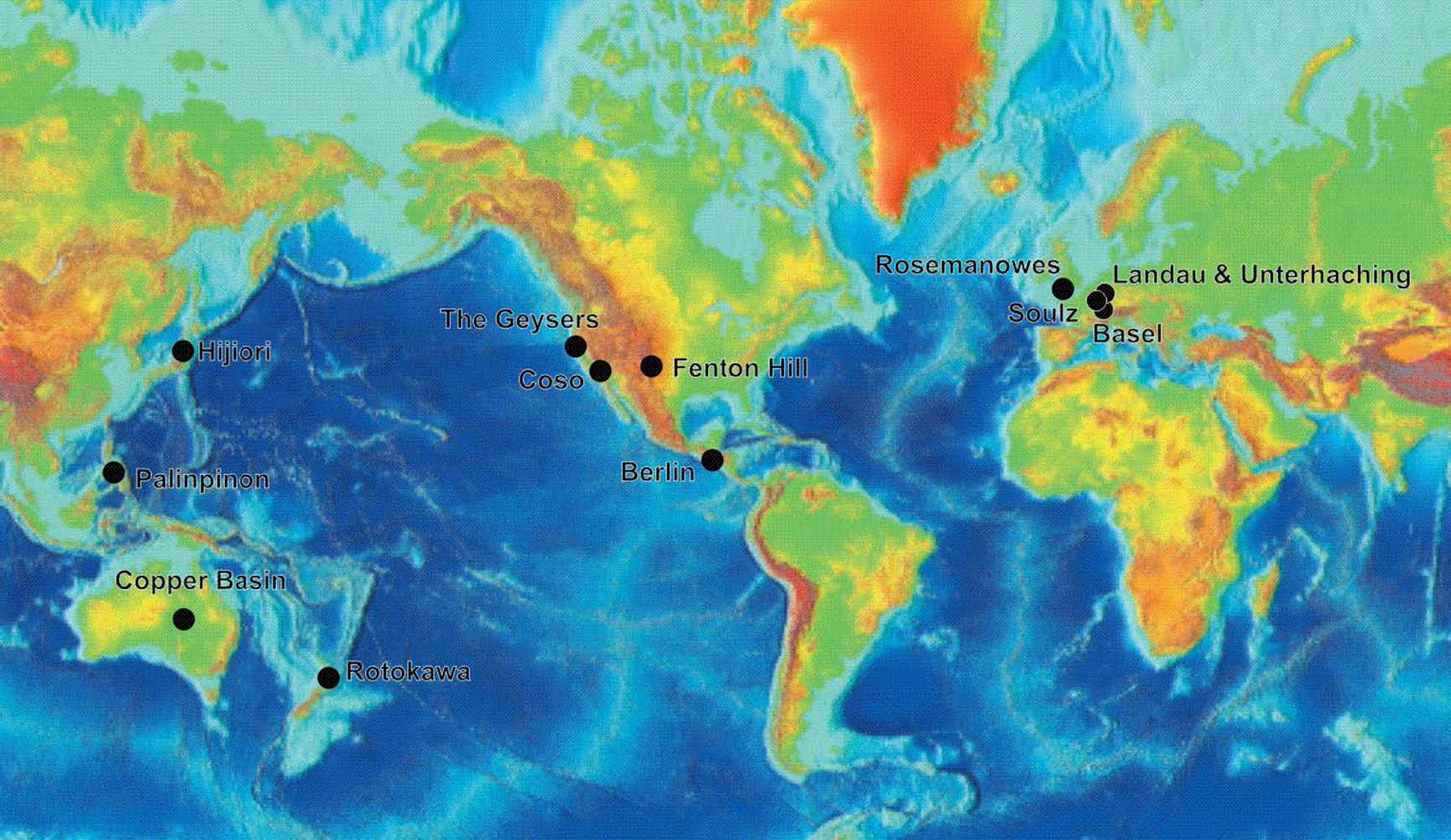
Geothermal activity worldwide: Geothermal developments were reviewed across 13 countries and five continents to identify global lessons in induced-seismicity risk management, and safety frameworks.
The challenge
For geothermal developers — particularly enhanced geothermal systems (EGS) and hot-sedimentary-aquifer (HSA) projects — fluid injection and stimulation can perturb the in-situ stress field and trigger felt seismic events. The consequences reach well beyond infrastructure. The 2006 Basel EGS project in Switzerland was suspended after felt events during a short high-pressure injection; Australia’s own Cooper Basin EGS program recorded events up to M3.7 during stimulation. Demonstrating that this risk is understood and controlled — technically, and in the eyes of regulators and the community — is now a precondition for project viability and finance.
.
Our approach
As part of its CO₂ storage risk-assessment program, CO2CRC undertook a comprehensive technical review of the global induced-seismicity record across more than a dozen geothermal fields on five continents — spanning conventional steam and binary systems (The Geysers, Coso, Rotokawa, Berlín, Palinpinon) and enhanced systems (Soultz-sous-Forêts, Cooper Basin, Basel, Fenton Hill, Rosemanowes, Hijiori, Landau, Unterhaching). The review dissected the triggering mechanisms, magnitude behaviour, monitoring approaches and control protocols at each site, and fed directly into a Probabilistic Seismic Hazard Assessment (PSHA) for the CO2CRC Otway Project.
Benefits
Reduced seismic risk
Identify potentially reactive faults, understand local stress conditions and assess induced-seismicity hazards before injection or stimulation begins.
Approvals and investment
Independent, evidence-based risk assessment supports regulatory submissions, technical due diligence and investment-readiness decisions.
Operational Control
Real-time monitoring and traffic-light protocols provide clear thresholds for adjusting, pausing or stopping injection as seismic conditions change.
Stakeholder confidence
Transparent risk framing and monitoring evidence help build trust with regulators, communities and other project stakeholders.
Why it matters to you
The core engineering disciplines are shared. The same stress-field characterisation, geomechanical modelling, microseismic monitoring and hazard-assessment methods CO2CRC applies to CO₂ injection apply directly to geothermal injection and stimulation. And because CO2CRC is an independent research organisation, its risk assessment carries genuine third-party weight — in a data room, with regulators, and with the community — where an operator’s own numbers may not.
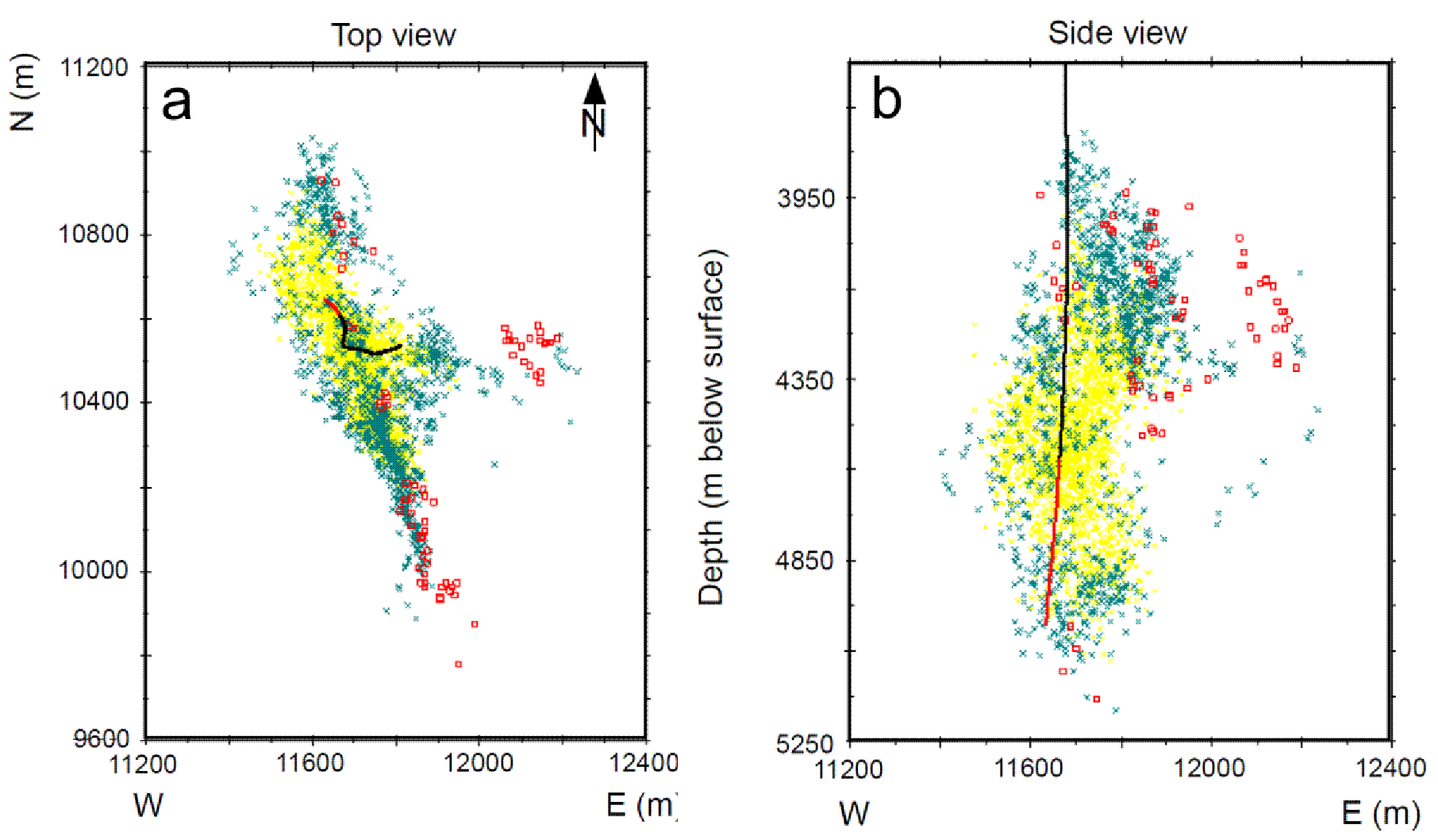
Seismic events recorded during and after injection at the Basel geothermal experiment, shown in plan and cross-section.
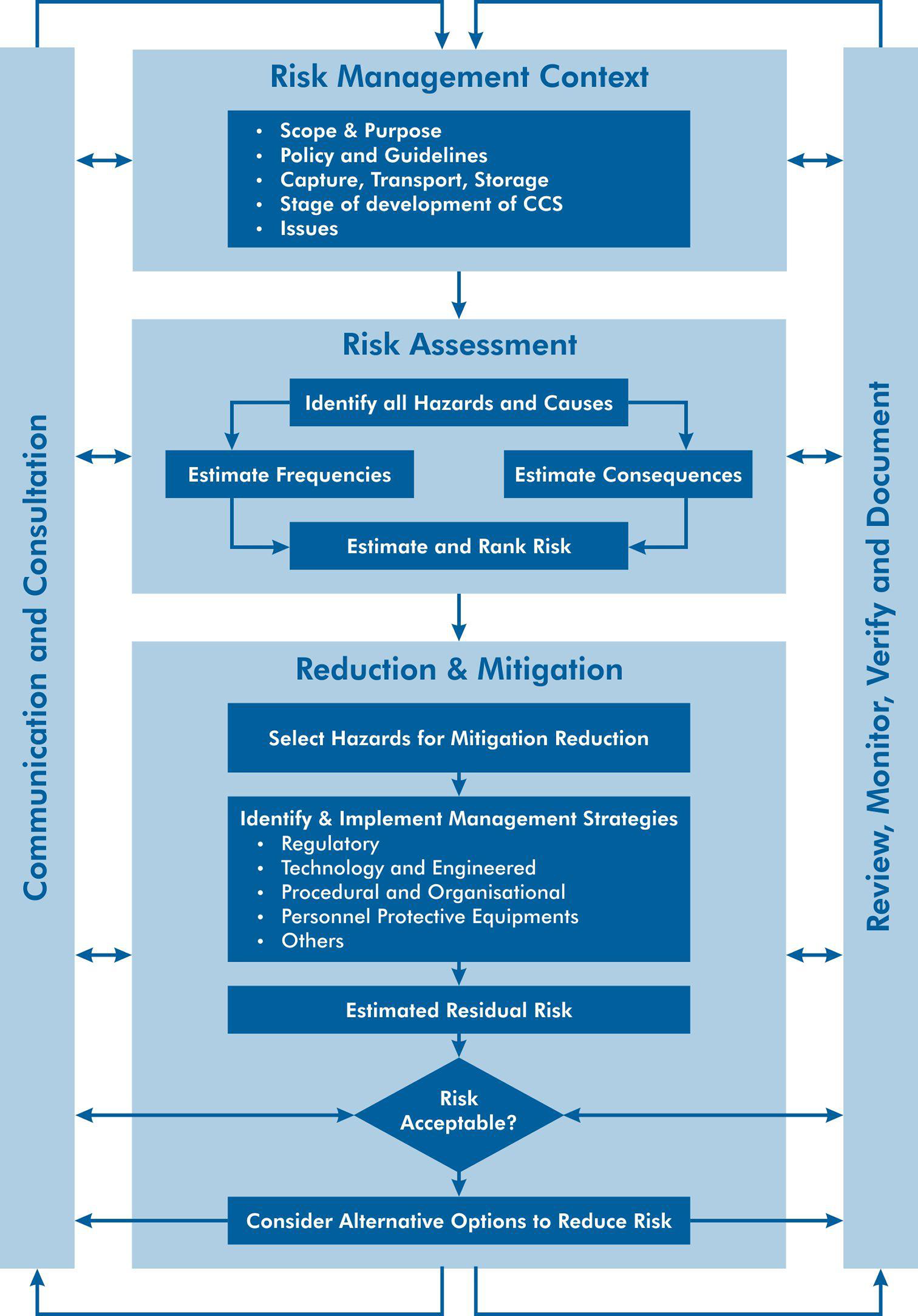
de-risking activity: A structured, iterative process combining hazard assessment, risk reduction, monitoring, stakeholder engagement and ongoing review.
What CO2Tech offers
Baseline seismicity characterisation and Probabilistic Seismic Hazard Assessment (PSHA)
Geomechanical and stress-field modelling; fault-reactivation and slip-tendency analysis
Microseismic monitoring network design and interpretation, drawing on the Otway International Test Centre’s MMV infrastructure
Real-time “traffic-light” injection-control protocol design
Community and regulatory social-licence risk framing
Independent, third-party validation for investment readiness and approvals
Geothermal Services
CO2Tech has unrivalled practical experience in capturing CO2 from industrial emissions in Australia. It can leverage its unique access to advanced storage projects providing the crucial connection between carbon capture and permanent underground CO2 storage.
If you’re a manufacturer, refinery, ‘Safeguard Facility’, etc. that is impacted by the Safeguard Mechanism, contact us today to see how CO2Tech can assist in your next steps to tackle your emissions reduction.
Contact Us