Techno Economics for Carbon Capture and Storage Projects
Know the true cost of your Carbon reduction project, before it costs you.
A Carbon Reduction Project that works technically but doesn’t stack up commercially will never reach Final Investment Decision. Getting the economics right, and getting them right early, is one of the most consequential steps in project development.
CO2Tech delivers rigorous, independent techno-economic analysis across the full CCS lifecycle: from first feasibility and technology selection through to FEED support and investment readiness.
Our Techno-Economic Expertise
CO2Tech’s techno-economic capability is built on 20+ years of deep domain knowledge, hands-on project analysis, and a global network of CCS experts developed through sustained engagement with Australia’s CCS research and project community. We bring that experience directly to your project.
We work with clients across the full spectrum of CCS project development, from early-stage scoping through to detailed feasibility and Front-End Engineering and Design, often partnering with specialist engineering and project delivery firms to provide the independent technical and economic voice your project needs.
That methodological rigour is what separates a credible economic assessment from a generic model. Our analysis draws on internationally recognised costing methodologies including NETL/DOE (USA), IEAGHG, and CO2CRC frameworks and integrates real-world data from 200+ CCUS studies and assessments delivered across 15+ jurisdictions.
What We Assess
Cost Basis Validation: We independently validate the economic assumptions underpinning your CCS project. That means stress-testing your capital cost estimates, operating expenditure, revenue streams, and discount rate assumptions against real-world data — and ensuring your economic model accounts for the full project lifecycle including regulatory approvals: build phase (typically 2–3 years), operations (20–40+ years), decommissioning, and MMV during operation and post decommissioning.
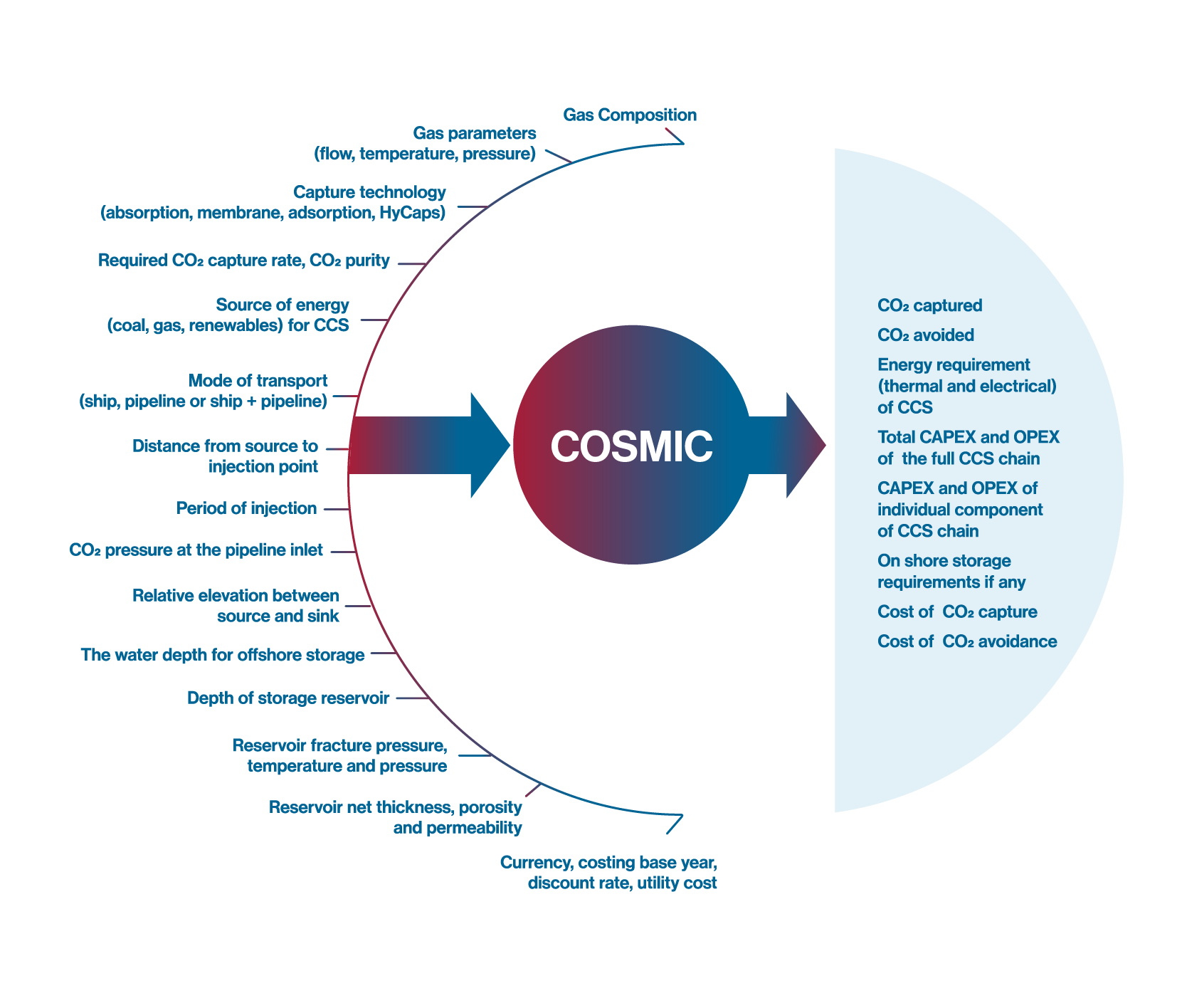
Process Options Assessment and Optimisation Modelling: Not all CCS pathways are equal. CO2Tech rigorously models competing configurations across capture technology, injection strategy, and storage formation, to identify the lowest-cost, highest-value pathway for your specific context. We perform sensitivity analysis and scenario modelling to ensure decision-makers understand the full range of outcomes, not just the base case.
Technology Assessment: We provide vendor-neutral assessment of all major capture technologies in the context of your facility’s emissions profile, CO₂ concentration, flow rates, and site constraints. Our assessments translate technical performance into economic terms — giving you a clear, comparable view of capital and operating cost trade-offs across competing technology options. We also model technology learning curves and FOAK-to-NOAK cost transitions, so you understand not just today’s costs but the trajectory as the industry scales.
Transport and Shipping Options: For projects where CO₂ transport is a significant cost driver, we assess pipeline, and maritime shipping options, modelling logistics costs and economies of scale to identify the most practical and economic solution. Our analysis of Australian industrial hub scenarios demonstrates that optimised shared transport infrastructure can reduce transport costs by approximately 35% compared to single-source options.
Legislative and Policy Context CCS project economics are inseparable from regulatory requirements. CO2Tech integrates the cost implications of OPGGSA permitting and state based legislation, MMV obligations, Safeguard Mechanism (Australia) compliance, and carbon credit frameworks directly into our economic models so there are no regulatory surprises at the financing stage..
Risk and Sensitivity Analysis: We perform structured sensitivity and Monte Carlo analyses to quantify the impact of uncertain variables such as discount rates, fuel prices, labour costs, reservoir permeability, CO₂ concentration, on project economics. This gives boards, lenders, and joint venture partners a clear understanding of project risk and critical sensitivities, before they commit capital.
What We Deliver
Feasibility Studies: From high-level screening through to detailed pre-FEED feasibility, CO2Tech assesses your project’s full cost picture. We evaluate capital costs (capture plant, compressors, pipelines, wells, seismic), operating costs (energy, maintenance, monitoring, labour, transport tariffs), and decommissioning obligations — delivering a clear view of project viability before you commit to major expenditure.
Cost of CO₂ Avoided: A critical and often misunderstood metric. CO2Tech calculates your project’s true cost of CO₂ avoided accounting for the emissions generated by the CCS process itself, not just the CO₂ captured. The cost of CO₂ avoided can vary significantly depending on CO₂ source characteristics, sector, energy sources, and cost boundaries and understanding that range is essential for comparing abatement options, reporting to regulators, and meeting Safeguard Mechanism (Australia) obligations or other legislative requirements within your region..
Financing Structures, recommendations, and Investment Readiness: Securing investment for a CCS project requires more than a technically sound design, it requires a financial model that lenders, governments, and equity partners can trust. CO2Tech analyses government support mechanisms, tax credits, carbon pricing, and incentive structures alongside project economics. We also assess Special Purpose Vehicle (SPV) structures, green bonds, blended finance, and other financing models, helping you build the bankable case your project needs.
Corporate and Project Readiness: CO2Tech helps you assess not just whether your project is economically viable, but whether your organisation is ready to execute it. We identify gaps in project maturity and internal capability and can deliver tailored training drawn from our global expert network, building the in-house capacity your team needs to own and advance your CCS project with confidence.
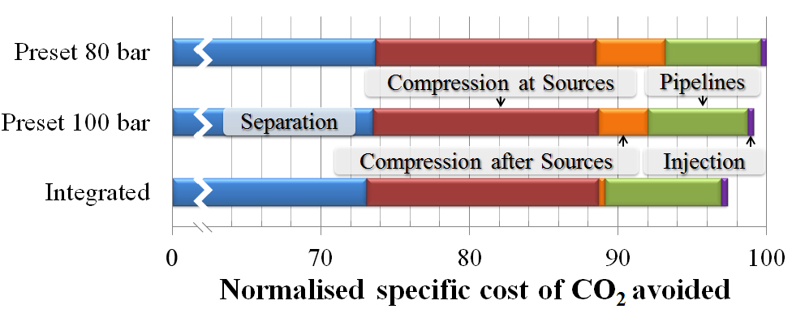
CO2Tech's case studies describe several different techno-economic approaches depending on the type of carbon reduction project.
Case Studies
CO2Tech have conducted several techno economic projects for LNG and hard-to-abate sectors as well as our own Stage 3 project conducted at our CCS test facility, the Otway International Test Centre.
Why CO2Tech?
Grounded in real data, not desktop assumptions: Our economic models draw on 20+ years of real injection and operational and MMV data from the Otway International Test Centre, and over 200 CCUS studies and assessments delivered across 15+ jurisdictions. Our analysis applies internationally recognised costing frameworks — NETL/DOE (USA), IEAGHG, and CO2CRC — so your results are benchmarked against the best available global data. That depth of real-world experience is what separates a credible economic assessment from a generic model.
Genuinely independent: CO2Tech has no vendor alliances, no technology licensing interests, and no engineering delivery revenues. Our economic analysis is never shaped by a preference for a particular technology supplier or project structure. That independence is why regulators, lenders, and governments trust our numbers — and why it matters for your project.
Global expert network Our techno-economic capability is augmented by a global network of CCS domain specialists developed over two decades. When your project requires deep expertise in a specific technology, geography, or regulatory environment, we bring the right people to the table.
Let’s talk about the economics of your CCS project.
Most engagements begin with a short scoping conversation at no cost.
Contact us to discuss how CO2Tech’s techno-economic expertise can support your project.
Contact us on info@co2tech.com.au
Why CO2Tech
CO2Tech has unrivalled practical experience in capturing CO2 from industrial emissions in Australia. It can leverage its unique access to advanced storage projects providing the crucial connection between carbon capture and permanent underground CO2 storage.
If you’re a manufacturer, refinery, ‘Safeguard Facility’, etc. that is impacted by the Safeguard Mechanism, contact us today to see how CO2Tech can assist in your next steps to tackle your emissions reduction.
Latest Case Studies